
Recent developments indicate a significant shift in Israel’s stance regarding a proposed U.S.-backed plan for Gaza. This distancing from the plan reflects the complexities of regional politics and the ongoing challenges faced in achieving lasting peace in the area.
The proposed U.S.-backed plan for Gaza aimed to address the humanitarian crisis and the socio-economic difficulties faced by the Palestinian people. It sought to create a framework for reconstruction and development, with the intention of fostering stability and reducing tensions between Israel and Palestinian factions, particularly Hamas. This plan highlighted the importance of international cooperation and aimed to engage multiple stakeholders, including Arab nations and European allies.
Initially, there was a degree of support from Israeli officials regarding the U.S. proposal. Some viewed it as an opportunity to improve relations with neighboring countries and demonstrate a commitment to humanitarian efforts. The notion of rebuilding Gaza was seen as a potential pathway to reducing hostility and enhancing security for Israel.
One of the primary reasons for Israel’s withdrawal from the proposed plan lies in security concerns. The Israeli government has consistently prioritized the safety of its citizens, and there is widespread apprehension that any economic aid or reconstruction efforts in Gaza could inadvertently bolster militant groups. Previous experiences have led to skepticism regarding whether aid reaches the intended beneficiaries or gets diverted to fund military activities.
The internal political landscape in Israel also plays a crucial role in this distancing. With upcoming elections and the influence of right-wing factions, there is increased pressure on leaders to adopt a hardline stance. Political leaders may fear that showing support for a U.S.-backed plan could be perceived as compromising national security, potentially leading to a loss of voter support.
Israel’s relationship with the United States is multifaceted. Although traditionally strong, there are moments of tension that can affect policy decisions. Israeli leaders may perceive the proposed plan as not fully aligning with their national interests or security needs. This divergence can lead to a recalibration of support, especially if there is a belief that the U.S. approach does not adequately consider the complexities of the Israeli-Palestinian conflict.
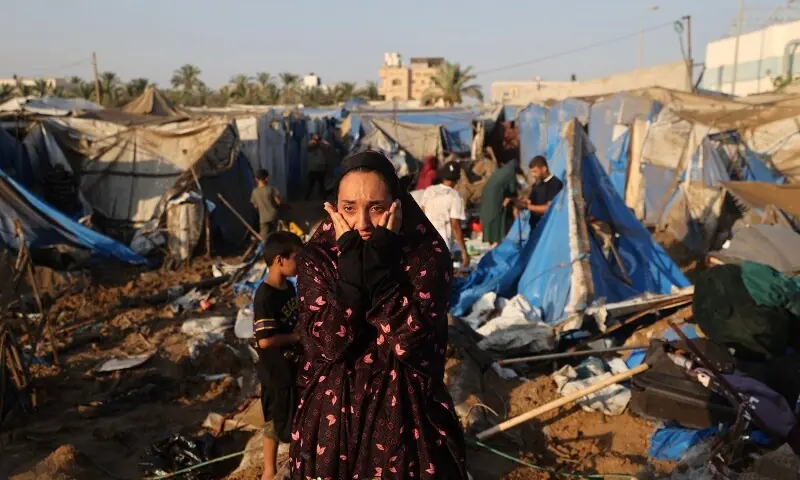
The distancing from the U.S.-backed plan has significant implications for Gaza. Without the prospect of international aid and reconstruction efforts, the humanitarian situation in the region may worsen. The lack of investment in infrastructure and services could exacerbate already dire living conditions, leading to increased instability and potential violence.
Additionally, the rejection of the plan could weaken the Palestinian Authority (PA), which has sought international support to govern effectively. A lack of cooperation from Israel may hinder the PA’s ability to project authority and legitimacy, further complicating the political landscape in the West Bank and Gaza.
The reaction from neighboring Arab states and the international community has also been varied. Some countries may view Israel’s distancing as a setback for peace initiatives, while others might see it as an opportunity to advocate for a more comprehensive approach that includes all relevant stakeholders. The dynamics of regional politics are continually evolving, and each nation’s response will shape future diplomatic efforts.
Moving forward, it is essential to consider alternative frameworks for addressing the challenges in Gaza. A comprehensive approach that encompasses not only reconstruction but also political dialogue and security guarantees could be vital in fostering a sustainable resolution to the conflict. Engaging all parties involved, including regional players, will be crucial in creating a viable pathway toward peace.
Israel’s distancing from the proposed U.S.-backed Gaza plan underscores the complexities of the Israeli-Palestinian conflict and the challenges associated with international intervention. As the situation evolves, it is imperative for all stakeholders to engage in constructive dialogue aimed at addressing both humanitarian needs and security concerns. A balanced approach that fosters cooperation and understanding may ultimately provide a foundation for lasting peace in the region.
Israel says it has communicated its “comments and concerns” to the United States, indicating it wants changes or clarifications to the proposal. Israeli officials say the version circulating publicly does not represent Israel’s official position, suggesting that the leaked or released document differs from what Israel says it has discussed privately with Washington. This does not necessarily mean Israel has rejected the entire plan. Rather, it indicates negotiations are continuing and that Israel believes the public version omits or alters elements it considers important.
- According to recent reporting, Israel’s concerns reportedly include issues such as:
the sequencing of any Israeli military withdrawal versus Hamas disarmament, how Hamas’ weapons would be verified and destroyed, and the roles of international actors involved in overseeing implementation.
This kind of public messaging is common during sensitive negotiations, where parties may seek to reassure domestic audiences or preserve leverage while discussions with mediators continue. At this stage, the details of any final agreement remain under negotiation.