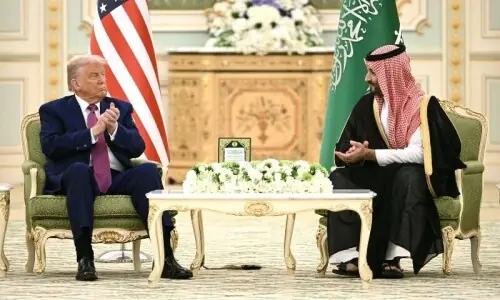

In recent discussions, Saudi Crown Prince Mohammed bin Salman emphasized the necessity of dialogue to mitigate escalating tensions in the Middle East. This statement came during a critical meeting with former U.S. President Donald Trump, where both leaders acknowledged the complex geopolitical landscape of the region. The Crown Prince’s approach reflects a strategic shift towards diplomacy amidst rising conflicts that have historically destabilized the region.
The Middle East has long been a focal point of international relations, marked by a series of conflicts involving various state and non-state actors. Issues such as territorial disputes, sectarian divisions, and the influence of external powers have contributed to a volatile environment. The situation has been exacerbated by the ongoing civil war in Syria, tensions between Iran and Saudi Arabia, and the Israeli-Palestinian conflict.
In recent years, the rise of extremist groups and the proliferation of weapons have further complicated the security landscape. The United States has been a key player in the region, often intervening in conflicts under the pretext of promoting stability and democracy. However, such interventions have sometimes led to unintended consequences, including prolonged violence and humanitarian crises.
Crown Prince Mohammed bin Salman’s call for dialogue reflects a recognition that military solutions alone are insufficient to address the intricate challenges facing the region. Dialogue serves as a crucial mechanism for conflict resolution, enabling parties to negotiate their differences and work towards mutually acceptable solutions.
The Crown Prince’s perspective aligns with a broader trend among Middle Eastern leaders who increasingly advocate for diplomatic engagement over military action. For instance, several Arab states have begun to re-establish ties with Syria, signaling a shift towards dialogue as a means of addressing regional instability.
One of the most pressing issues requiring dialogue is the tense relationship between Iran and Saudi Arabia. Historical rivalries, coupled with divergent political ideologies, have fueled conflicts across the region, notably in Yemen and Lebanon. The Crown Prince has expressed a willingness to engage in discussions with Iran to address mutual concerns, particularly regarding security and economic cooperation.
By fostering dialogue, both nations could potentially de-escalate tensions and explore opportunities for collaboration on regional issues. This could lay the groundwork for a more stable Gulf region, reducing the risk of conflicts that could draw in external powers.
The Israeli-Palestinian conflict remains a central issue in Middle Eastern geopolitics. The Crown Prince has emphasized the importance of a two-state solution, advocating for the rights of Palestinians while recognizing Israel’s right to exist. Dialogue between Israel and Arab states has gained momentum following the normalization agreements brokered by the Trump administration.
Saudi Arabia’s involvement in this dialogue could lead to a more comprehensive peace process, addressing longstanding grievances and fostering cooperation among regional players. A stable resolution to the Israeli-Palestinian conflict could significantly reduce tensions and promote economic development in the region.
Another critical area for dialogue is regional security. The proliferation of extremist groups poses a significant threat to stability, necessitating collaborative efforts to combat terrorism and enhance security cooperation. The Crown Prince’s discussions with Trump included proposals for increased intelligence sharing and joint military exercises among Gulf states.
By establishing a framework for security cooperation, regional countries can better address common threats and reduce the likelihood of conflict. This cooperative approach could also deter external actors from exploiting regional divisions for their own interests.
The United States plays a pivotal role in facilitating dialogue and de-escalation efforts in the Middle East. Trump’s administration had previously sought to enhance relationships between Israel and Arab states, a strategy that has the potential to reshape the geopolitical landscape. The Crown Prince’s engagement with Trump is indicative of Saudi Arabia’s recognition of the U.S. as a key partner in addressing regional challenges.
However, the U.S. must approach its role with sensitivity, considering the diverse interests of Middle Eastern nations. A balanced approach that prioritizes diplomatic engagement over military intervention is crucial for fostering a sustainable peace.
While the Crown Prince’s call for dialogue is commendable, several challenges must be addressed to make meaningful progress. Distrust among regional actors remains a significant barrier, as historical grievances and competing interests often hinder constructive conversations.
Additionally, external powers, including Russia and China, have increased their influence in the Middle East, complicating the dynamics of dialogue. Their involvement can either facilitate discussions or exacerbate existing tensions, depending on their interests and objectives.
To move towards a more stable Middle East, it is essential for leaders to prioritize dialogue as a means of addressing conflicts. Initiatives that promote people-to-people connections, cultural exchanges, and economic cooperation can complement high-level diplomatic efforts.
Furthermore, involving civil society organizations in the dialogue process can provide a broader perspective on the concerns of ordinary citizens. Grassroots movements often have the potential to bridge divides and foster understanding among diverse communities.
Crown Prince Mohammed bin Salman’s assertion that dialogue is necessary for de-escalating tensions in the Middle East represents a significant step towards a more peaceful and stable region. By prioritizing diplomatic engagement and addressing key issues such as Iran-Saudi relations, the Israeli-Palestinian conflict, and regional security cooperation, there is potential for meaningful progress. The role of the United States, alongside regional leaders, will be crucial in facilitating these discussions. Ultimately, sustained dialogue and cooperation could pave the way for a more secure and prosperous Middle East, benefiting not only the region but also the global community.